If you are searching for a low-maintenance home in Bonney Lake, you may notice something right away: the condo and townhome market here is not huge, and it is not one-size-fits-all. That can make your search feel a little more complicated, especially if you are trying to compare older communities, newer planned areas, dues, and ownership rules all at once. The good news is that with the right local context, you can narrow your options faster and make a more confident decision. Let’s dive in.
Bonney Lake attached homes at a glance
Bonney Lake has grown quickly, and that growth helps explain the range of attached housing you will find today. City planning materials report 8,178 housing units as of 2022, with about 21% of the housing stock made up of attached or multi-unit housing, including townhomes, duplexes, triplexes, four-plexes, apartments, and mobile homes.
The housing stock is also relatively modern. City materials say 62% of Bonney Lake homes were built since 1990, which helps create a mix of established attached-home communities and newer planned development.
For buyers, that means you should expect a smaller, more specialized market rather than a large inventory of condos. Current market pages point to roughly 10 townhouses for sale in Bonney Lake at a median listing price of about $450,000, which reinforces how important timing and preparation can be when the right home comes up.
Why condos and townhomes fit Bonney Lake
Bonney Lake offers a lifestyle that appeals to buyers who want access to the outdoors without taking on the full upkeep of a detached property. The city sits at the south end of Lake Tapps, maintains 142 acres of parks, and has 3 miles of trails. Allan Yorke Park also provides public boat-launch access on Lake Tapps.
That setting makes attached housing a practical fit for many buyers. If you want to spend more time enjoying trails, parks, or the lake and less time maintaining a yard, a condo or townhome can line up well with that goal.
At the same time, Bonney Lake is more suburban than urban in feel. The city’s mobility plan says SR 410 is the only state-owned facility in Bonney Lake, there is no local transit service in the Bonney Lake area, and Sound Transit Route 596 connects the Bonney Lake Transit Center with Sumner Station during peak commute periods.
What you will find in Bonney Lake
Established and newer communities
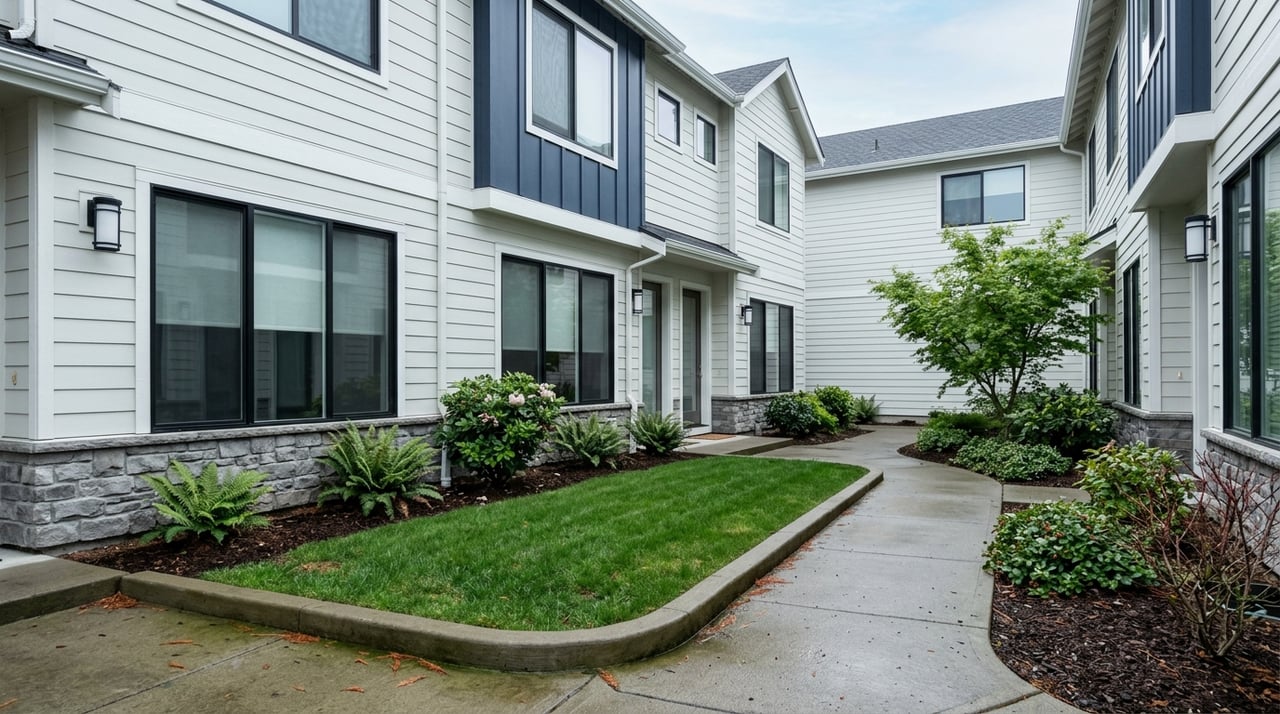
Bonney Lake has both older attached-home communities and newer options. Pierce County plat records include communities such as The Townhomes at Bonney Lake Condo and East Pointe, and current listings still reference those areas.
That matters because it tells you the market is not centered around one dominant condo district. Instead, you are more likely to compare a handful of distinct communities with different ages, layouts, dues, and rules.
Tehaleh and newer low-maintenance options
One of the clearest examples of newer low-maintenance living near Bonney Lake is Tehaleh, immediately south of the city. The official community site describes Tehaleh as a 4,700-acre master-planned community with more than 40 miles of trails, 17 parks, and 55+ living options.
Current market pages for Bonney Lake townhomes also include listings described as being in Tehaleh. If you are drawn to newer construction, planned amenities, and trail-oriented living, this area may be worth a closer look.
Condo vs townhome in Washington
This is one of the biggest points of confusion for buyers, and it is important in Bonney Lake. In Washington, townhome describes the building style, but the legal ownership structure can vary.
State guidance notes that condos, co-ops, and HOAs are treated as common interest communities, and townhomes may be organized either as HOAs or as condominiums. In simple terms, two homes that look similar from the outside may come with very different ownership documents, maintenance responsibilities, and association structures.
That is why you should not assume a property is a condo just because it is attached, or assume it functions like a single-family home just because it is called a townhome. The legal setup affects what you own, what the association maintains, and which disclosures you receive.
What to review before you buy
HOA dues are only the start
Monthly dues matter, but they are only one piece of the picture. You will want to confirm what those dues actually cover.
Depending on the community, dues may include items such as landscaping, exterior maintenance, roads, insurance, trash, water or sewer service, or reserve funding. Two homes with similar dues can offer very different value if the scope of coverage is not the same.
Ask for the resale certificate early
In Washington, the resale certificate is one of the most important due-diligence documents for condos and many common interest communities. State law requires disclosures that can include assessments, past-due amounts, special assessments, budgets, financial statements, insurance coverage, reserve-study status, rental restrictions, and other governing-document details.
The timing matters too. Washington law creates a short cancellation window when the resale certificate is delivered close to contract signing, so you will want to read the timing language carefully and avoid waiting until the last minute.
Reserve studies deserve close attention
Reserve studies are especially important in attached communities because shared components often need long-term planning and funding. Under Washington law, associations generally must prepare and update reserve studies, subject to certain exemptions, and the resale certificate must say whether a current reserve study exists.
If there is no current reserve study, the certificate must disclose that and warn that insufficient reserves may lead to a special assessment. That is a practical reminder that the lowest dues are not always the safest long-term value.
Older and newer communities may differ
Bonney Lake buyers may also run into different disclosure forms and association practices from one community to another. Washington’s newer common interest community law generally applies to communities created on or after July 1, 2018, while many older communities remain under earlier statutes unless they choose to opt in before January 1, 2028.
In a market like Bonney Lake, where older and newer attached communities exist side by side, that can mean different paperwork, different rules, and different association processes depending on the property.
Questions to ask when comparing communities
When you are deciding between Bonney Lake condos and townhomes, it helps to compare each option with the same set of questions:
- Is the property legally a condo, a townhome in an HOA, or another common-interest form?
- What do the monthly dues cover?
- Is there a current reserve study?
- Are there any pending or recent special assessments?
- What do the CC&Rs, bylaws, and rules say?
- Are there rental restrictions?
- What do recent meeting minutes reveal about repairs, budgeting, or upcoming projects?
- How does the location fit your commute, especially if you rely on SR 410 or regional routes?
These questions can save you from comparing homes on price alone. They also help you understand the true monthly cost, the level of maintenance support, and the community’s financial health.
Matching the home to your lifestyle
Choose established communities for simplicity
Established attached-home communities may appeal to buyers who want a smaller footprint and a more familiar neighborhood setting. In some cases, these homes can offer a practical path into Bonney Lake with less exterior upkeep than a detached home.
That said, older communities may come with different maintenance cycles, reserve needs, and association histories. This is where reviewing the documents carefully becomes especially important.
Choose newer areas for amenities
Newer attached homes near Bonney Lake, including Tehaleh-area options, may appeal to buyers who want planned amenities, trail access, and newer construction. For some buyers, that trade-off is worth it even if the setting is more master-planned and the dues or pricing differ from older communities.
The best fit depends on how you live day to day. If you value parks, trails, and a newer-home feel, these communities may stand out.
Keep commuting in view
Because Bonney Lake is largely auto-dependent, location can shape your routine as much as the floor plan does. If you commute regularly, pay attention to how quickly you can reach SR 410, the Bonney Lake Transit Center, or your usual regional route.
A home that looks perfect on paper may feel less convenient if the location adds friction to your daily schedule. In this market, lifestyle and commute often go hand in hand.
How to shop smarter in Bonney Lake
A focused search usually works better than a broad one here. Because inventory appears smaller and more specialized, you will likely benefit from identifying your must-haves early, such as price range, garage needs, maintenance preferences, and whether you want an established community or a newer planned area.
It also helps to move beyond listing photos quickly. In Bonney Lake attached-home communities, the resale certificate, reserve study, governing documents, and dues often tell you as much about the property as the finishes inside the home.
The more clearly you understand the structure of the community, the easier it becomes to spot real value. That is especially true when comparing homes that may appear similar but operate very differently once you look at ownership and association details.
If you want help sorting through Bonney Lake condos, townhomes, and community documents, Rhett Elton can help you compare options, understand the local market, and find the right fit for your lifestyle and budget.
FAQs
What kinds of condo and townhome communities are in Bonney Lake?
- Bonney Lake has a mix of established attached-home communities and newer planned options, rather than one large condo market.
What is the difference between a Bonney Lake condo and a Bonney Lake townhome?
- A townhome describes the building style, while the legal ownership structure may be a condominium or an HOA-based community.
What should you review before buying a condo or townhome in Bonney Lake?
- You should review dues, the resale certificate, CC&Rs, bylaws and rules, budget, meeting minutes, reserve study, and any special assessments or rental restrictions.
Are Bonney Lake condos and townhomes good for commuters?
- They can be, but Bonney Lake is largely car-dependent, so it is important to evaluate access to SR 410 and regional commute routes.
Why do reserve studies matter in Bonney Lake attached-home communities?
- Reserve studies help show whether the association is planning and saving for future repairs, and a missing or outdated study can increase the risk of special assessments.